Dubai, United Arab Emirates – The first half of 2026 has confirmed that success in the UAE construction sector is no longer measured by the number of projects launched alone. For small and medium-sized construction businesses, the ability to deliver projects efficiently, comply with regulations, embrace technology, and meet sustainability expectations is becoming the real competitive advantage.
With the UAE’s construction market projected to reach USD 130.8 billion by 2029, opportunities remain strong. However, growing competition also means SMEs must adapt to higher client expectations and increasingly complex project requirements.
Based on industry trends observed during H1 2026, here are five lessons every construction SME should take into the second half of the year.
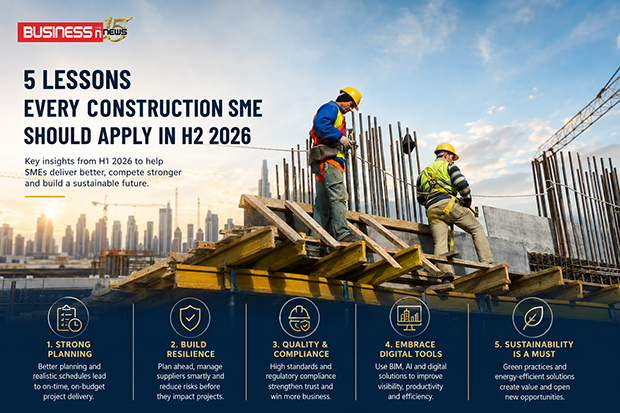
1. Strong Project Planning Wins More Business
Construction activity remains high across the UAE, supported by population growth, real estate investment, and government infrastructure projects. In Dubai alone, more than 10,700 building permits were issued during the first quarter of 2026.
For SMEs, winning projects is only the first step. Delivering them on time and within budget is what builds long-term client relationships. Investing in better planning, realistic schedules, and clear project coordination can help smaller firms compete with larger contractors.
2. Build Resilience Into Every Project
Supply chain disruptions, changing material costs, and longer procurement periods continue to affect construction businesses worldwide.
SMEs that plan procurement early, diversify suppliers, and anticipate potential delays will be better positioned to protect project timelines and profitability. Resilience is no longer about reacting to problems—it’s about preparing for them before they happen.
3. Quality and Compliance Create Competitive Advantage
The introduction of Dubai Law No. 3 of 2026 reinforces the importance of quality and safety throughout the building lifecycle.
For SMEs, compliance should be viewed as an investment rather than a cost. Companies with strong quality management systems, proper documentation, and consistent safety standards are more likely to earn client confidence and secure repeat business.
4. Digital Tools Are Becoming Essential
Digital technologies are no longer reserved for large construction companies.
Solutions such as Building Information Modeling (BIM), AI-powered project monitoring, digital documentation, and cloud-based collaboration are helping SMEs improve project visibility, reduce errors, and increase operational efficiency.
Businesses that adopt practical digital tools today will be better prepared for the industry’s future demands.
5. Sustainability Is Now a Business Requirement
Green building practices continue to gain momentum through initiatives such as the UAE Net Zero 2050 Strategy, Dubai’s Al Sa’fat Green Building System, and Abu Dhabi’s Estidama Pearl Rating System.
Developers increasingly expect contractors and consultants to understand sustainable construction methods, energy-efficient materials, and environmental compliance.
For SMEs, building sustainability expertise can open new business opportunities while strengthening their competitive position in future tenders.