Sharjah, UAE – 7 July 2026 – Gulftainer’s transformation extends far beyond expanding port capacity. The company is repositioning itself as an integrated trade infrastructure provider, connecting ports, shipping, inland logistics, industrial ecosystems and AI-powered digital platforms into a single operating model.
The strategy aligns with major government-led trade initiatives, including the India–Middle East Economic Corridor (IMEC) and the UAE’s role in China’s Belt and Road Initiative (BRI). By integrating maritime gateways, inland logistics networks and digital technologies, Gulftainer aims to facilitate faster, more resilient and transparent cargo movement across the UAE, India, China, East Africa and the GCC.
As global supply chains become increasingly regionalised, manufacturers are diversifying production, while businesses seek integrated logistics partners capable of managing entire supply chains rather than individual transport services. Responding to these shifts, Gulftainer has reorganised its business around four complementary platforms:
- GT Ports – Container terminals and maritime gateways.
- GT Logistics – Inland logistics, multimodal transport and supply chain solutions.
- GT Parks – Logistics parks, warehousing and industrial ecosystems.
- GT Maritime – Regional shipping services linking strategic trade corridors.
Together, these platforms create a unified operating model that connects production, transportation, storage and distribution through a single customer interface.
Building One of the Region’s Largest Logistics Ecosystems
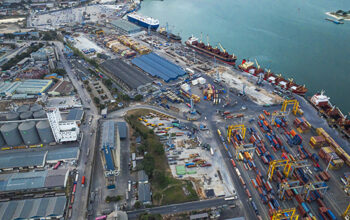
A key pillar of the strategy is the continued expansion of Khorfakkan Commercial Terminal (KCT), where planned capacity is expected to exceed 10 million TEUs under the long-term masterplan. The future integration of Etihad Rail will further strengthen KCT as a multimodal gateway linking sea, road and rail transport.
Supporting the port expansion are Al Dhaid Logistics Park and Sajaa Logistics Park, which will provide a combined annual inland logistics capacity of 2.3 million TEUs.
The integrated network will include warehousing, bonded and non-bonded storage, cold-chain facilities, contract logistics, container freight stations (CFS), distribution centres, e-commerce fulfilment, cross-docking, value-added logistics services, light industrial activities and multimodal transport solutions.
The ecosystem is further supported by GT Maritime, which currently operates 10 chartered vessels and plans to expand its fleet with company-owned ships, creating seamless trade corridors across key regional markets.
Accelerating Intelligent Trade
Digital technology is central to Gulftainer’s long-term strategy. The company is developing an AI-powered platform that integrates supply chain management, real-time cargo tracking, customer self-service, digital payments and one of the region’s first integrated logistics digital wallets.
Building on its ability to maintain resilient cargo flows during recent regional disruptions, Gulftainer aims to combine physical infrastructure with digital intelligence to create a more connected, efficient and resilient trade ecosystem, supporting the UAE’s ambition to strengthen its position as a global trade and logistics hub.